 Zagros Human Rights Center NGO with consultative status with ECOSOC

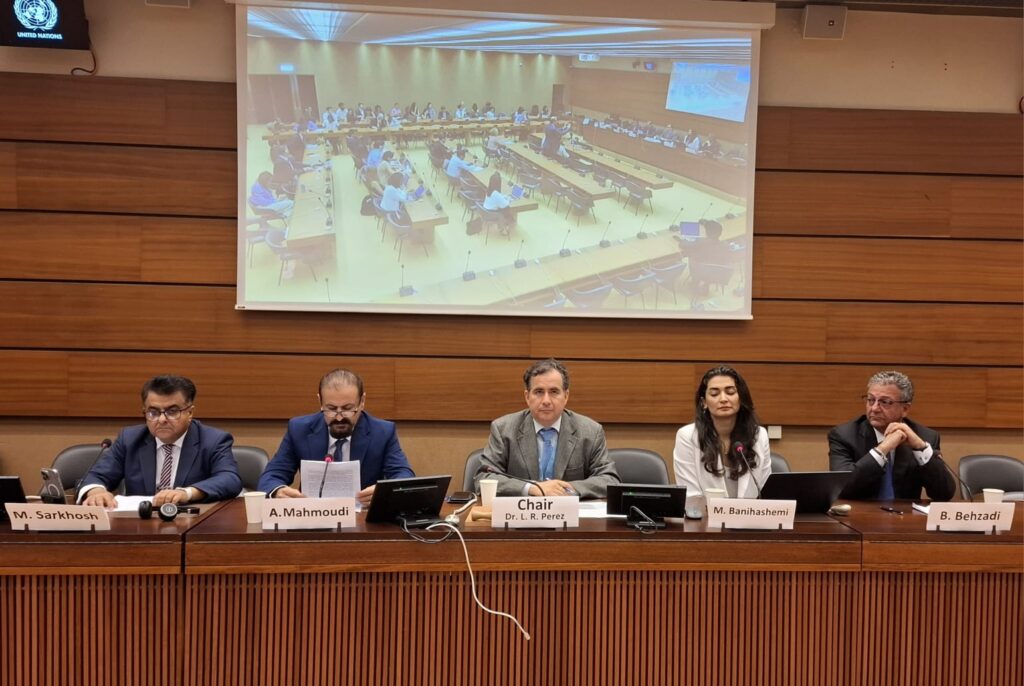
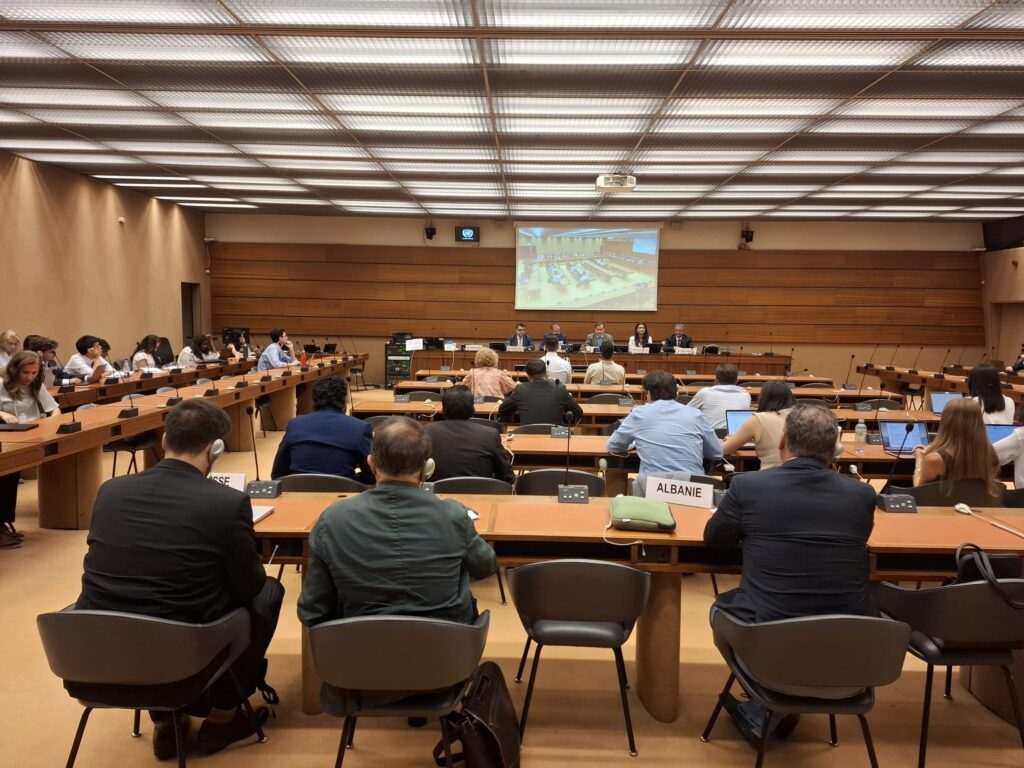
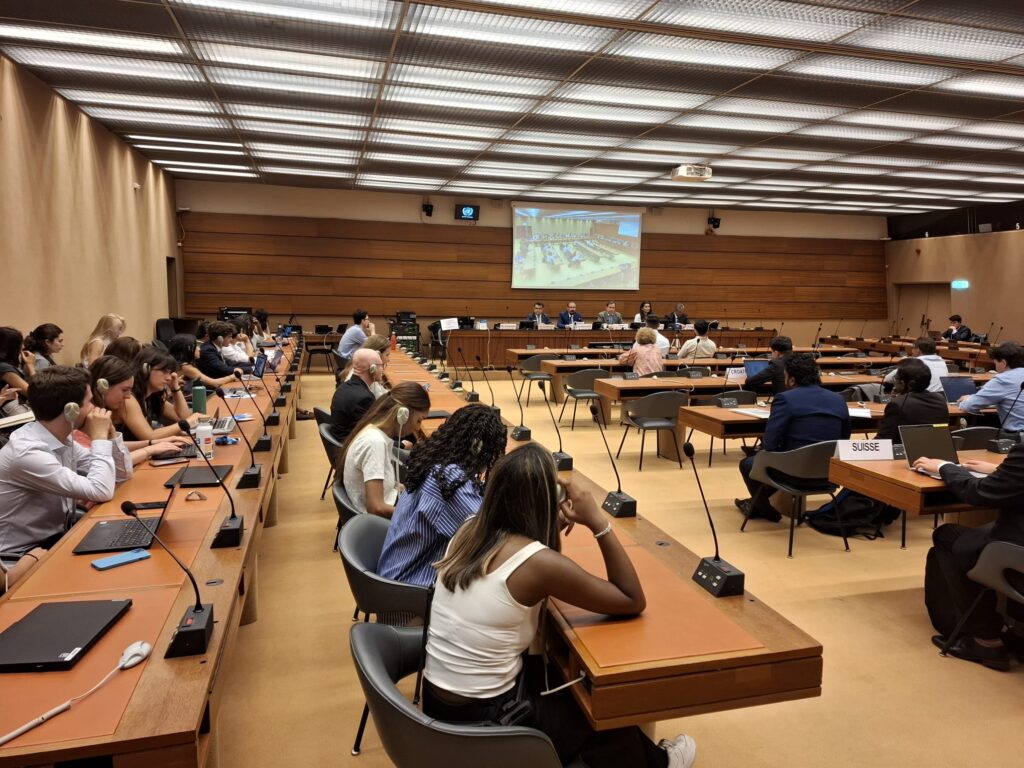
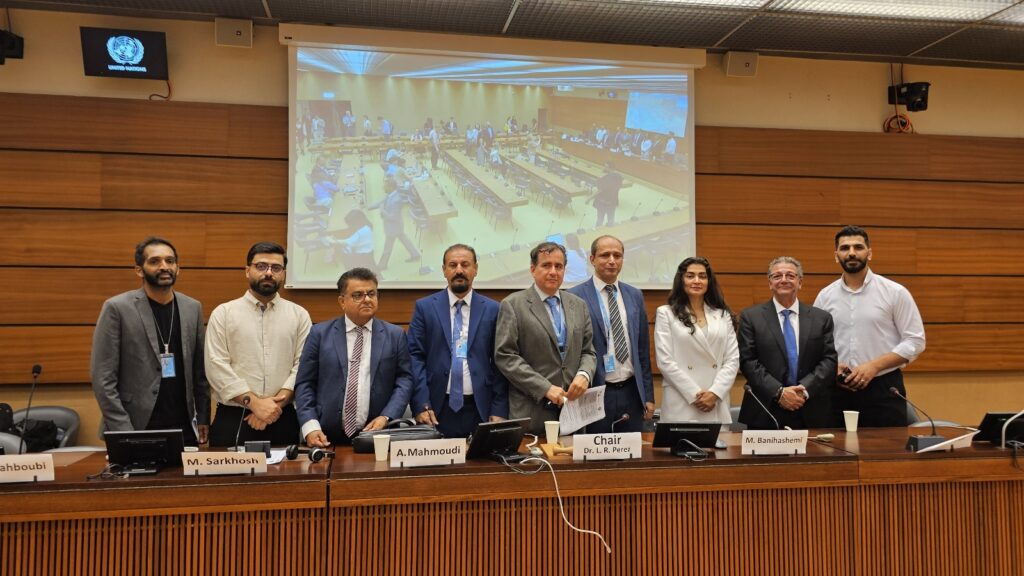
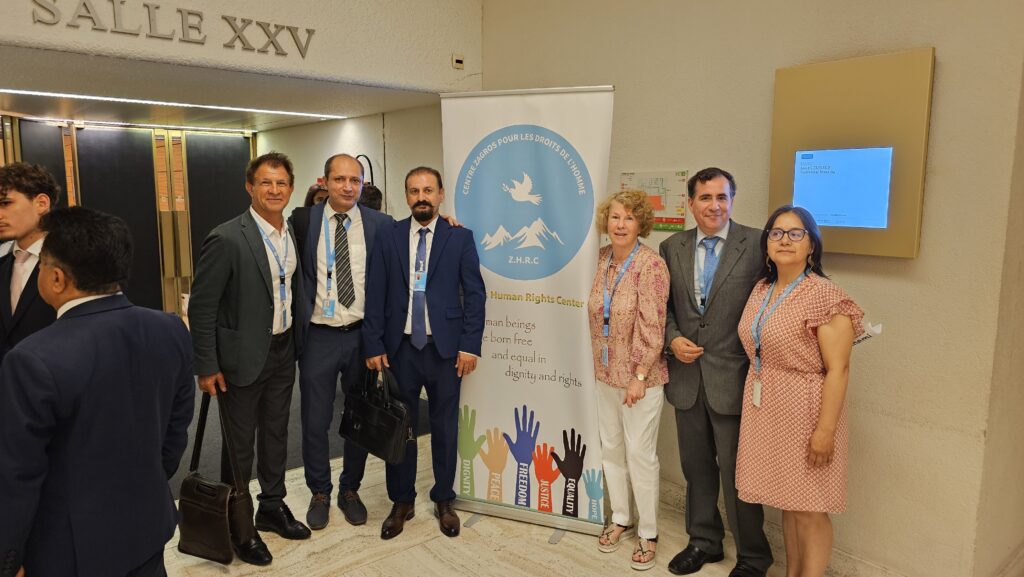
On June 19, 2025, on the sidelines of the 59th session of the United Nations Human Rights Council, the Zagros Human Rights Center, in collaboration with Maloca Internationale and the Association Solidarité Internationale pour la Paix (ASIP), organized a side event entitled “Human Rights in Iran: Political Prisoners, Deaths in Custody, and Executions.” The meeting brought together human rights defenders, activists from Iran’s ethnic and religious minorities, and international experts in the context of an alarming escalation of human rights violations in Iran.
The discussion was moderated by Dr. Leonardo Pérez, President of Maloca Internationale, who opened the session by highlighting the sharp increase in executions in 2025 and the urgent need for international response. He emphasized the role of the UN Human Rights Council in preventing the Iranian regime from using the death penalty as a political instrument.
In a video message, Mrs. Shiva Mahboubi, spokesperson for the Campaign to Free Political Prisoners in Iran (CFPPI), sounded the alarm about the immediate dangers facing detainees in the midst of war. She spoke of the denial of medical care, chemical torture through psychotropic drugs, attacks on prisons, and the risk of mass killings behind closed doors. She called for the unconditional release of political prisoners and for a moratorium on executions.
Mr. Mohim Sarkhosh, a Baluch activist, presented a talk entitled “Balochistan – A Colony Within Iran”, describing a region subjected to a de facto colonial policy. He denounced political and economic exclusion, the mass execution of Baluch prisoners (at least 52 between January and May 2025), arbitrary arrests of women, children, and undocumented individuals, and inhumane prison conditions in Zahedan, Saravan, and Chabahar.
Mr. Adel Mahmoudi, a Kurdish human rights defender, reported a surge in executions of Kurdish detainees. Between October 2023 and May 2025, more than 190 Kurds were executed, including at least 13 political prisoners. He highlighted cases of torture, rushed trials without legal representation, and enforced disappearances, such as those recently reported in Urmia prison.
Mrs. Maryame Banihashemi, an expert in international justice, exposed the multidimensional oppression targeting women and religious minorities—particularly the Bahá’í community—through a repressive judiciary and the growing militarization of public institutions.
Mr. Babak Behzadi, an advocate for liberal democracy, concluded the panel by highlighting the transformative potential of Iranian youth, who largely support human rights and a transition to the rule of law. He expressed hope that this new generation will overcome the atmosphere of fear imposed by the regime.
During the open discussion that followed, Mohammad, a representative of the Solidarity Advocacy Campaign, raised concerns about the situation of religious minorities such as Jews, Zoroastrians, and Bahá’ís. Simin Fahandej, representative of the Bahá’í community, recalled the systematic persecution Bahá’ís have suffered since 1979. She referenced an official document signed by Khamenei banning Bahá’ís from any form of professional or social advancement, as well as massive hate propaganda campaigns in the media and on social platforms.
Given the current tensions with Israel, she expressed concern over new baseless espionage accusations targeting Bahá’ís, often used as scapegoats. Another participant mentioned rumors of imminent executions hastily approved by the Iranian parliament. Several speakers noted that the Islamic Republic often needs no justification to kill; the primary goal is to maintain an atmosphere of fear.
A final testimony denounced the plundering of natural resources in non-Persian regions such as Balochistan, Kurdistan, and Ahwaz, for the benefit of the country’s center, perpetuating a structural inequality that has persisted for over a century.
The panel unanimously condemned the use of the death penalty, arbitrary detention, and torture as tools of authoritarian rule. All participants called for:
– An immediate moratorium on executions in Iran;
– The unconditional release of all political prisoners;
– The deployment of independent investigative missions to Iranian prisons;
– Increased pressure by UN Human Rights Council member states.
This side event provided an essential platform for marginalized voices from Iran and reaffirmed the moral and legal obligation of the international community not to turn a blind eye to these crimes.
Zagros Human Rights Center