 Zagros Human Rights Center NGO with consultative status with ECOSOC

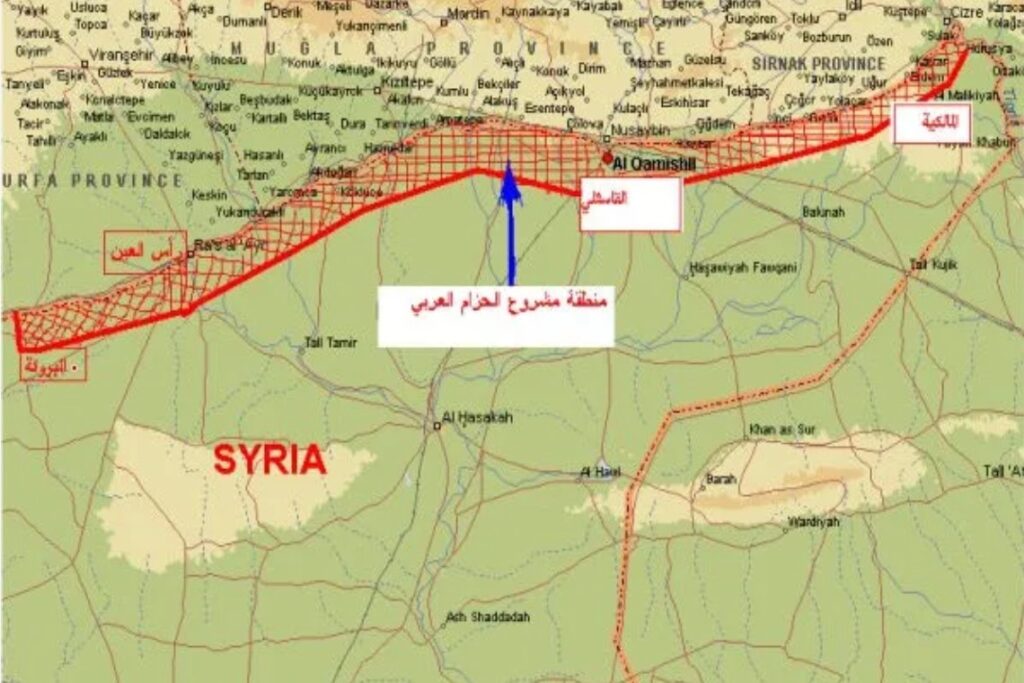
On 24 June 1974, the Syrian authorities began implementing the so-called “Arab Belt” project, following Decree No. 521 issued by the leadership of the Ba’ath Party. This plan, developed as early as 1966, was part of a systematic policy of discrimination against the Kurdish population, aiming to erase their national identity and deprive them of their fundamental rights.
The project led to the massive confiscation of agricultural lands belonging to indigenous Kurdish inhabitants, which were redistributed to Arab families brought in from other regions of the country. A 15-kilometre-deep colonization belt was established along the Syrian-Turkish border in the al-Hasakah Governorate, effectively breaking the geographical and cultural continuity of Kurdish areas.
This project was not an isolated measure, but rather followed the exceptional census of 1962, through which more than 400,000 Kurds were arbitrarily stripped of their Syrian nationality. As a result, they suffered decades of statelessness, marginalization, and deprivation of civil, social, and economic rights.
The Zagros Human Rights Center firmly condemns this internal colonization policy and its devastating consequences. We assert that all political, legal, and social effects resulting from this project are null and void, and must be addressed within a transitional justice framework that ensures the restitution of land to its rightful owners, the restoration of nationality to those who were stripped of it, the rehabilitation of victims, and the collective recognition of the Kurdish people’s rights.
Respect for the rights of the Kurdish people, as well as those of other national components and minorities in Syria – including Assyrians, Armenians, Syriacs, Circassians, and Turkmens – is essential to building a democratic Syrian state based on equal citizenship, justice, inclusion, and meaningful recognition of the country’s ethnic, cultural, and linguistic diversity.
The Zagros Centre calls on the Syrian transitional authorities and all democratic forces to prioritize the definitive abolition of past discriminatory policies and to engage in sincere dialogue with representatives of the affected peoples, with a view to achieving a just, inclusive, and lasting political solution.
Zagros Human Rights Center
Geneva, 24 June 2025